

URGENT KFARSAROUN APPEAL
The time is here for the Kfarsaroun Charity Association Fundraising Event.
As you are all aware we haven’t been able to hold our functions for the last two years due to the pandemic. Having said that, our work is never done and we would like to continue to help the people of Kfarsaroun.
This time around our fund raising will be different. As a charity we have collectively decided to send much needed supplies, via shipping container, to Kfarsaroun. These supplies include (but not limited to) medications, powdered milk, long life foods etc.
We have been in contact with many people from Kfarsaroun and they are in desperate need of these items. The situation in Lebanon is extremely difficulty right now and people don’t have access to the essential items required day to day.
As President and as committee members we would like to ask for your kind donations regarding this cause. Any amount that you can donate will go along way to assisting us with this container.
Since the charities incorporation of 1975, we have never asked for any donations, all previous monies raised in the history of the Association have always come from our annual fundraiser. The charity is committed to assisting the people of Kfarsaroun and this container will go a long way in supplying many villagers with the essentials they need to survive.
The Bank Account Details are as follows:
Arab Bank
BSB 917111
ACCOUNT 700043890
Please also insert name which the donation is on behalf, as a reference number.
No donation is too big or too small, the Kfarsaroun Charity Association sincerely thanks you in advance for your kindness.
If you have any questions relation to this fundraiser please contact either of the following people.
Elias Nassif
Kfarsaroun Charity President 0425 230 649
Samia Elias 0433 773 779
Secretary
John Ashak 0414 799 049
Treasurer
Slopes of will……A poetic thought by Doctor: Bahia ahmad tashm

The sighs of my heart resound with the depth of the sensitive feeling ,and my feelings shine to the rhythm of transcendent hope….
My gaze swims in the sky of the existence to seek eternal wisdom in the mystery of life,and I plead with dignty on the slopes of will, so that I may enjoy the joy painted on the faces of my dreams…..
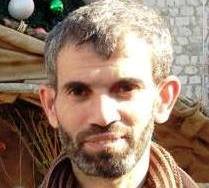
Where are the imprisoned Palestinian writers?*/ Feras Hajj Mohammed
Occupied Palestine (Nablus)
On November 15 of each year, PEN launches its solidarity campaign under the title “The Imprisoned Writer’s Day”, in which it sheds light on the cases of writers imprisoned or facing trial, and through which it calls for urgent international action to release and protect them. These cases symbolize --that We highlight-- the patterns of threats and attacks that writers and journalists around the world are often subjected to as a result of their peaceful practices of freedom expression.”
The previous paragraph topped the international campaign launched by the "PEN International" to advocate for imprisoned writers around the world for the current year 2021 under the title "Prisoner Writer's Day 2021". It targeted in its campagine the writers “Selahattin Demirtas” on Tuesday 15 November - Tuesday 16 November, Rahil Daut - Wednesday 17 November, a collective case of 12 Eritrean writers - Thursday 18 November, and Mohamed Al-Roken - Friday 19 November. Al-Roken imprisoned in the United Arab Emirates is the only Arab writer in this campaign.
There are many writers imprisoned by Arab regimes in all parts of the Arab world, and there is no Arab prison without a writer, poet or journalist. The Arab countries have turned into a place where the writer is humiliated, and becomes either fired, exiled, or imprisoned or becomes a domesticated sheep devoured by the regime, then turned into nothing but a daily hypocrisy trumpet who broadcasts its nonsense in newspapers and magazines in glorifying the Arab dictator. In other cases he turns to prevarication or to silence. In all of which are cases that the Arab regime bears its burden in the life of the Arab writer.
Perhaps what the Arab writer is exposed to especially in the Arab “slaughterhouses of death” is enough for the International PEN Organization to start a special campaign to introduce these “forgotten” people in Arab prisons, although these campaigns, if they happen, will not be acceptable to the Arab regimes, and will be completely ignored. The Arab dictatorial regime, in all its actions, is protected from the Western regime and so it is safe and reassuring, and this regime will consider these campaigns useless, passing matter and deserve nothing. Nevertheless, none of the governmental organization dares to stand with them and adopt their causes. Many writers died in Egyptian prisons under the pretext of combating terrorism and the Brotherhood’s tide, and some of them are still living in very difficult conditions inside the prisons of the Egyptian regime. Silence is applied to their status and names, no one talks about them.
This is what concerns the Arab countries and Arab writers, but in occupied Palestine, the matter is more horrific, and the writer is not only imprisoned in the prisons of the Palestinian Authority, which brutally suppresses freedom of expression with the help of a number of opportunistic utilitarian intellectuals who turned into hypocritical “ewes”, defending the authority and its actions against the writers. At the same time, none of the Palestinian non-governmental organization defending these writers or adopting their causes, neither the Palestinian Writers Union nor the local human rights institutions, or there are human rights campaigns led by independent intellectuals, not to mention the silence of the Ministry of Culture and the official media, because of being part of the Palestinian Authority. This situation is more or less the same as what is happening in Gaza, where the authority in the besieged strip sticks its sharp nails into the bodies and souls of writers, and they are attacked with beatings as well, just as it happens in the West Bank.
The cruelest thing in occupied Palestine is what is happening inside the prisons of the Zionist occupation. The occupation has taken a clear strategy against all writers who engage in the culture of resistance and call for liberation and the right of self-determination, and to fight against the occupation and get rid of it and its evil. As a result I can say that, all Palestinian writers have gone through the experience of detention in the prisons of the Zionist occupation since 1948 until today, and other additional measures were applied to Palestinian writers such as house arrest, dismissal from work, travel ban, deportation, confiscation of books, and sabotage of public and private libraries, inspecting school books, punishing anyone who has a book that the occupation has placed on its blacklist, restricting the entry of books into the occupied territories of Palestine, and preventing the holding of cultural seminars that do not fit what the authorities or the military ruler thinking.
Perhaps the International PEN does not know that there are currently dozens of writers in the prisons of the Zionist occupation on whom the occupation authorities have imposed high sentences. Hundreds of years will be spent by writers or even after death, if they happen to die in prison. The “corpse” must spend the full term, The sentence does not end with death. Does PEN know that?
Does the International PEN know that these imprisoned writers, along with thousands of Palestinian prisoners, are deprived of basic human rights inside prisons, as they are subjected to unjustified beatings, and to confiscation of their personal belongings, books, notebooks, pens and drafts of their writings, and are subjected to isolation and imprisonment without trial, under the title of the secret file, some of them are in open prison sentences time under the heading of "administrative detention"?
Does PEN know that thousands of books written by writers in prisons, have been destroyed, confiscated and prevented from mentioning its writers, under the pretext that they are serious “terrorist acts” that incite “violence”? Does the International PEN know that there are female writers in Zionist prisons who were arrested because of their “inciting” writings, as the occupation authorities claim, as it happened in Jerusalem, and it happened in other areas within the occupied areas under the authorities since 1948?
Does the International PEN know that the occupation authorities impose imprisonment on every writer who refuses military service in the ranks of the so-called army, and is punished with a prison term of up to nine months. This happened with the poet Samih al-Qasim, with the poet Marzouk al-Halabi, the writer Saeed Nafaa, Osama Melhem and many others? And it will happen to every writer who refuses this kind of "compulsory conscription."
Does the International PEN know that the occupation authorities are demolishing entire villages and expelling their owners from them? Including the writer Sheikha Heliwa, who used to live in the Haifa area, and her village, Tail al-Araj, located on the outskirts of Haifa, was demolished. And now she lives outside her hometown. And her village is unrecognized. Does the International PEN know what the occupation authorities mean by this term “unrecognized” villages? It means that they are villages that must be removed as they are illegal, and the authorities do not provide them with water and electricity, and do not recognize the existence of an administrative authority for them (a municipality or a village council).
Does the International PEN know that every day a male or female writer is born inside the prisons of the occupation to tell the story of his arrest and imprisonment. After being abandoned by international and local laws, and waiting for a miracle to be liberated from the life of the “isthmus” in which he lives? These writers have no hope except what they make on paper, they work with the theory of "illusion of freedom", they believe or make themselves believe that when they write they are practicing the act of freedom or trying to escape from prison and escape outside the iron room. They are trained to live with emptiness no more than. In fact, freedom is their neglected demand. Who can support these writers? Who will raise their issues to be supported by their fellow writers around the world?
Finally, does the International PEN know that there are Palestinian writers imprisoned in the prisons of the Arab regimes in Saudi Arabia and the United Arab Emirates as well, not just the writer Muhammad Al-Roken? In the belly of the whale there in Saudi Arabia is the poet Ashraf Fayyad and in the Emirates the poet Ramez Mansour whom nobody know about his destiny, he is missing, or he may have died, so there is no information about his health condition and his threatened life.
After all, the International PEN Organization must know that the Palestinian writer’s suffering is complex, from the Palestinian Authority, as an Arab regime, and from the occupation authorities and Arab regimes, and it must pay attention to these writers and their suffering in these prisons, which extend to more than twenty prisons at least.
=========
* Note: I am publishing this article to coincide with the International Day of Solidarity with the Palestinian People on November 29, 2021.
How you can vote for Greystanes Ward Labor


A poetic thought by Doctor Bahia ahmad tashm: A smile on the socket of my dream

I look with my own eyes to break the restrictions of my alienation,
And to embrace a confident smile on the hole of my dream …….
My overwhelming will prevents me from sinking into the slumber of despair, destroying it from all sides…
My responsibility is:to paint the colors of the rainbow in the surface of my sky and the eyes of my loved ones despite the worries sweeping my land…
The Hon. Shaoquett Moslemane brief contribution on the NSW government’s Covid -19 harshest treatment of Western Sydney

The Hon. Shaoquett Moslemane brief contribution on the NSW government’s Covid -19 harshest treatment of Western Sydney. The people of South West and West of sydney, had the hardest lockdown throughout Australia at any time during the pandemic.
…..
Monday was truly Freedom day for the people of South West and Western Sydney. It is a day of relief. The Pandemic was not just a health crisis but for the people of Western Sydney it was an economic crisis and a political crisis as they suffered the full brunt of an ignorant NSW government and arrogant federal government. The Target was Western Sydney. Police compliance operations were stepped up and the noose around Western Sydney tightened.
The NSW Government imposition of curfews on Western Sydney LGAs they called areas of concern was another blow to communities brought down to their knees pleading for assistance as they struggled to pay their mortgage, pay rent and bills or put food on the table.
People in Western Sydney began to wonder why the ill treatment. Why were people in Eastern Sydney in their thousands flocking to the beaches with little regard for masks or social distancing free to enjoy the fresh air. This, while South West and Western Sydney, where there are no beaches, few pools, relatively few parks were the red danger zones,?
Why the difference in policy when the Delta disaster originated in Bondi and spread from Bondi, the Sydney’s East, Yet Bondi has never been an LGA of concern.
Why did Health Minister Brad Hazzard have no issue with beachgoer’s masklessness, not interested in fining them or discovering their vaccination status, while the people of Western Sydney suffer the sweltering heat, have their pools and Aquatic Centre closed. People rightly asked Why?
The lack of any curfew in the East intensified perceived partiality and that sense of injustice.
The Premier herself admitted the use of curfews did not have much of an impact on stopping the spread of COVID. So Why did the government persist with it?
What the NSW government needed to provide was extra financial support for individuals and businesses as many suffered losses in trade of up to 70 per cent.
West and South West Sydney have borne the brunt of restrictions - movement permits, curfews, heightened enforcement measures, forced business closures and the overwhelming number of COVID cases,” Yet minimal support was provided.
Shadow Treasurer Daniel Mookhey said unless there is urgent support, there is a real risk of long term negative impacts, and turning short term, temporary pain, into long term economic devastation.
This is why the opposition decided held a virtual roundtable with West and South West Sydney business and community leaders to discuss and hear first hand from those that mattered, what is needed to deliver meaningful economic recovery that will help people and business get back on their feet once lockdown and restrictions are lifted.
Deputy Liberal Leader, Stuart Ayres MP, admitted that his Government’s lockdown singled out and disproportionately impacted Western Sydney.
Well, we knew this and as our shadow Minister for Western Sydney, Greg Warren MP said: “The people of Western Sydney won’t forget how this Government treated them during this lockdown”.
I miss….a poetic thought by Doctor: Bahia ahmad tashm

I miss a legendary love that gives me a cup of happiness….
I miss the tones of classy words that rob me of my calm and threaten my dreams…..
I miss seeing the loud laughter on the stage of the days…and that my ambition
accompanies eternity ….
I long for peace to reign supreme and to become the language of all existence.
A poetic thought by doctor bahia ahmad al tashm: Time is mine

How I wish ,I had time to organize its minutes and make it hotbed for my dreams!
I wish,I could catch the happy moments to make them eternal…
If time were mine to make his hours happy ,
Days of love and his minutes are freedom……
If time were mine to make his past known its present is beautiful and its future is peace……
A POETIC THOUGHT: CHANT for MY DREAM/ DOCTOR BAHIA AHMED AL TASHM

I’m watering the flowers of my dream with dew drops for my patience…..
And I sing with the joyful birds the songs of my great ambition….
………………………………
I sow the seeds of love in the field of my soul and wait for its ripe fruits at the time of my hope.
How great is the passion for the sea of wishes ,and what is the finest longing to seek their fulfillment!
Happy Eid Al Adha from Diane Colman, Sandra Doumit and Akin Songur

We wish you and your family happy Eid Al Adha
We are very proud to have been preselected to run for Cumberland City Council in the Greystanes Ward, on behalf of the Labor Party
My ADJOURNMENT SPEECH ON ABORIGINAL AND TORRES STRAIT ISLANDER PEOPLE AND NEED FOR TREATY- NOW.


Australia has a devastatingly violent and deadly history when it comes to the treatment of our Aboriginal and Torres Strait Islander people. Since 1788 Aboriginal and Torres Strait Islander people have been subject to incomprehensible atrocities, and have had their culture and their way of life almost eliminated. From the bloody onslaught at the time of British invasion right through to the inequality that continues to permeate society, First Nations people continue to be let down by our governments. Reconciliation Week 2021 offers an opportunity to pause and consider this harrowing past. In the past few decades there have been major historical milestones in Australia's journey to reconciliation. The 1967 Referendum saw 90.77 per cent of Australians vote "yes" when asked whether the Australian Government should be able to legislate on behalf of First Nations people and whether they should be included in the census. The historic Mabo decision that ruled that Australian land was not terra nullius at the time of colonisation led to the establishment of the Native Title Act in 1993.

In 2008 the then Prime Minister Kevin Rudd gave the Apology speech. Despite these advancements, Indigenous Australians continue to be over-represented in statistics of incarceration, health issues, low education and a plethora of other categories. This year, in 2021, the theme of reconciliation week is "More than a word. Reconciliation takes action." So what does active reconciliation look like? Karen Mundine, the CEO of Reconciliation Australia, stated:
Reconciliation isn't a single moment or place in time. It's lots of small, consistent steps, some big strides, and sometimes unfortunate backwards steps ...

This sentiment is reflected in the strategic direction of Reconciliation Australia. It has five pillars of reconciliation: race relations, equality and equity, institutional integrity, unity and, finally, historical acceptance. Each of these pillars aligns with a desired aim and action plan for one day achieving a reconciled nation. At the forefront of all of these is the need to amplify and prioritise First Nations voices in guiding these endeavours.
One way of achieving this is through the establishment of a treaty—a treaty that formalises the expectations of a relationship. Australia is the only Commonwealth nation to not have a treaty with its Indigenous population. It is widely believed that a treaty in Australia would address issues of sovereignty, land rights, shared power, the need for a guaranteed voice in government, recognition, ownership, reform and entitlements. Not only would the establishment of a treaty in Australia have these tangible impacts, which would contribute toward reconciliation; it would also be a symbolic gesture of the intent to change. Bob Hawke is fondly remembered by Aboriginal and Torres Strait Islander people for his attempts to establish a treaty, which were ultimately hindered by resistance. Nevertheless, theBarunga Statement served as an important reminder that there was the potential for change in the appropriate political landscape.

More recently, in 2017, theUluru Statement from the Heart saw Aboriginal and Torres Strait Islander people from across Australia come together in a historical moment of unification. The statement was a powerful call to action from the First Nations people to the Australian Government and population. The concluding statement in the document is:
In 1967 we were counted, in 2017 we seek to be heard. We leave base camp and start our trek across this vast country. We invite you to walk with us in a movement of the Australian people for a better future.

The main objective of the statement was to enact constitutional change that enshrined First Nations voices into Parliament. This action would ensure that First Nations people were involved in policymaking decisions that affected them. What theUluru Statement from the Heart highlighted was that the journey of reconciliation would be impossible if the voices of Australia's First Nations people are not included. To achieve a reconciled Australia, Aboriginal and Torres Strait Islander people will need to be given the platform, opportunity and legitimacy to guide and advise conversations about their experiences in this nation. The Victorian Government has paved the way through the recent adoption of the Advancing the Treaty Process with Aboriginal Victorians Bill 2018. It established the necessary framework for beginning the treaty-making process. If Victoria, South Australia and Northern Territory can start the process, why can't we?
Subscribe to:
Posts
(
Atom
)

**


Read more
-
A little girl went to her bedroom and pulled a glass jelly jar from its hiding place in the closet. She poured the change out on the floor a...
-
 At 11am on Good Friday, the Honourable Tony Abbott, Prime Minister of Australia, walked into a packed Our Lady of Lebanon’s Cathed...
 -
 After the closing of Al Hamra and AK2000, Tyre ,South of Lebanon had no official cinema, but this is going to change soon. Kassem I...
 -
 By ninemsn staff A New York lawyer who paid nearly $12,000 to a high-end dating service is suing the company after they failed to find his d...
 -
 f rom OzArab Media A distinguished gathering of community figures, cultural advocates and legal professionals came together on Friday, 27...
 -
James 4:14: "Whereas you don�t know what your life will be like tomorrow. For what is your life? For you are a vapor, that appears for...
-
 Although illegal, prostitution in Lebanon is in full swing, but in a bizarre secretive form. The Male Prostitution is on the Rise in B...
 -
 From the depth of the deluge and in a hopeless hope, I tried to get god,s attention in Baghadadi dialect That was heard even by those who ...
 -
 Sitting one weekend in one of Sydney's coziest Café with my friends, our table just happens to be close to a mutual friend (Di...

Search in Al-ghorba
